If your broadband wheezes every time someone starts a video call while another person sticks Netflix on, the question probably isn’t whether the internet is broken. It’s more likely: do I need full fibre, or am I being sold more speed than I’ll ever use? Fair question. Broadband providers love a big number. What matters is whether your connection keeps up when real life happens.
What does full fibre actually mean?
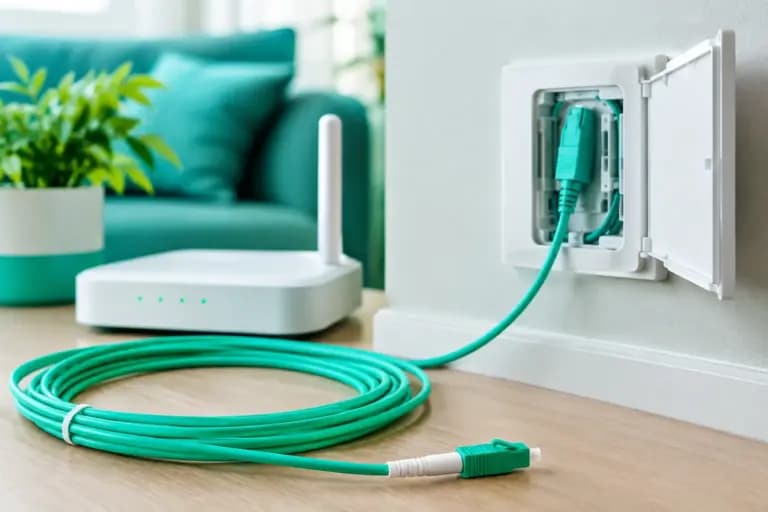
Full fibre means the connection runs on fibre-optic cable all the way to your property. That’s different from older part-fibre services, where fibre gets close to your home and the final stretch still uses old copper phone lines.
That last copper section is often where performance starts to wobble. Speeds can drop, latency can rise, and reliability can suffer, especially at busy times or if the line quality is poor. Full fibre is built to avoid that bottleneck. In plain English, it’s faster, steadier and better suited to homes and businesses that do more online than just scroll the headlines.
It also tends to be more future-proof. You might not need ultra-fast speeds today, but the general direction of travel is obvious – more streaming, more connected devices, more cloud backups, more gaming, more remote working, more everything.
Do I need full fibre, or is standard broadband enough?
Sometimes standard broadband is fine. If you live alone, mostly browse websites, send emails, watch the odd bit of iPlayer and never really notice buffering, full fibre may not feel life-changing overnight.
But broadband demand creeps up quietly. One smart TV becomes two. A video call overlaps with a software update. Doorbell cameras, smart speakers and tablets all join the network. Suddenly the connection that looked fine on paper starts having a bit of a meltdown.
The honest answer is this: you need full fibre if your current service struggles, your household has heavy internet use, or you want a connection that stays solid under pressure. You may not need it if your usage is genuinely light and your current line is reliable and fairly priced. Not every home needs gigabit speeds. Plenty do need a better type of connection.
The clearest signs full fibre is worth it
If your broadband slows down every evening, that’s a clue. If video calls freeze, online gaming lags, or 4K streaming dips into blurry mush, that’s another. If several people in the house are online at once and somebody always has to lose, the line is probably the problem.
Upload speed matters too, and it gets ignored far too often. Older broadband products can be painfully lopsided, with decent download speeds but sluggish uploads. That becomes a pain if you work from home, back up files to the cloud, post large media files, use security cameras or spend half your life on Teams and Zoom. Full fibre packages often offer far better upload performance, and in some areas even symmetric speeds, where upload and download are the same.
That difference is not just for tech obsessives. It’s the difference between sending a file in seconds rather than going off to make tea while it crawls across the line.
Who benefits most from full fibre?
Homes with multiple users usually see the biggest jump. A family with two adults working from home, children streaming and gaming, and a house full of Wi-Fi devices can eat through bandwidth quickly. The more simultaneous activity you have, the more useful full fibre becomes.
Gamers also benefit, though not always in the way adverts make out. Huge download speeds are handy for installing games and updates faster, but latency and consistency matter just as much. Full fibre tends to give a more stable experience, which is what actually helps when you’re mid-match and your connection decides to have a moment.
Remote workers are another obvious group. If your job depends on reliable calls, cloud access and quick uploads, unstable broadband is not a minor annoyance. It’s a work problem. The same goes for small businesses, freelancers and anyone running systems from home.
Then there are heavy streamers. If your household runs multiple HD or 4K streams at once, full fibre gives you more breathing room. No buffering. No family negotiations over who gets to use the internet properly.
When full fibre might be more than you need
Let’s be fair about it. Not everyone needs the fastest package available. If you use the internet lightly and your current connection already does the job without dropouts, switching to a top-end full fibre plan may be overkill.
The mistake people make is assuming the question is binary: either bargain-basement broadband or ludicrous speed. It’s not. Full fibre is the underlying technology. The speed tier you choose is the bit that should match your actual usage.
So yes, you might want full fibre but not necessarily 1 Gbps, 2 Gbps or beyond. For many homes, an entry or mid-range full fibre package is more than enough. You still get the reliability benefits without paying for headroom you won’t touch.
Speed is only part of the story
Broadband buying gets reduced to one headline number, which is handy for adverts and not much else. A faster package on poor infrastructure can still feel patchy. A well-run full fibre service at a moderate speed can feel far better day to day.
That’s because real-world experience depends on more than raw download speed. Reliability, latency, upload performance, Wi-Fi setup, congestion and support all matter. If your provider sticks inflation-linked rises in the small print, sends you offshore when something breaks and takes an age to fix faults, that affects value just as much as speed does.
This is why the best question isn’t just do I need full fibre. It’s do I need a better connection overall.
Full fibre and your home setup
One awkward truth: even excellent broadband can look bad if your home setup is poor. Thick walls, bad router placement and overcrowded Wi-Fi channels can all make a fast service feel sluggish.
So before blaming the line, check the basics. Is your router shoved behind the telly? Is it in a cupboard? Are you expecting perfect Wi-Fi in a loft conversion three walls away? Full fibre fixes a lot, but it does not perform miracles through Victorian brick.
If you switch, it’s worth paying attention to router quality, mesh options for larger homes, and whether you need wired connections for gaming consoles, office kit or smart TVs. The line into the house matters. So does everything after it.
Is full fibre better value in the long run?
It can be, especially if the price difference between old copper-based broadband and full fibre is small. In many cases, you’re paying a little more – or sometimes about the same – for a connection that is faster, more reliable and less likely to feel outdated halfway through your contract.
That said, price still matters. If a package looks cheap but comes with annual CPI plus extra rises, setup fees, or the usual nonsense buried in tiny text, the deal may not be as tidy as it first appears. A straightforward monthly price often tells you more about value than a headline discount ever will.
For renters and movers, flexibility is worth looking at too. If switching is a faff, installation is delayed, or support disappears the moment you sign up, a good package quickly turns sour. This is one area where smaller, sharper providers often do a better job than the lumbering household names. Giant, for example, leans into exactly that – fast networks, plain pricing and support that actually answers.
So, do I need full fibre?
If your internet is already under strain, yes, probably. If you work from home, live with other heavy users, stream a lot, game online, upload large files or simply want a more reliable connection, full fibre makes a real difference.
If your usage is light and your current service is stable, you may not need to rush. But if you’re signing up for a new broadband deal anyway, it often makes sense to choose full fibre where available rather than tie yourself to older tech that will feel tired sooner rather than later.
The smart move is not buying the biggest number on the page. It’s choosing the connection type and speed tier that fit your life without the usual telecom smoke and mirrors.
Broadband should cope quietly in the background. If yours keeps demanding attention, that’s usually your answer.