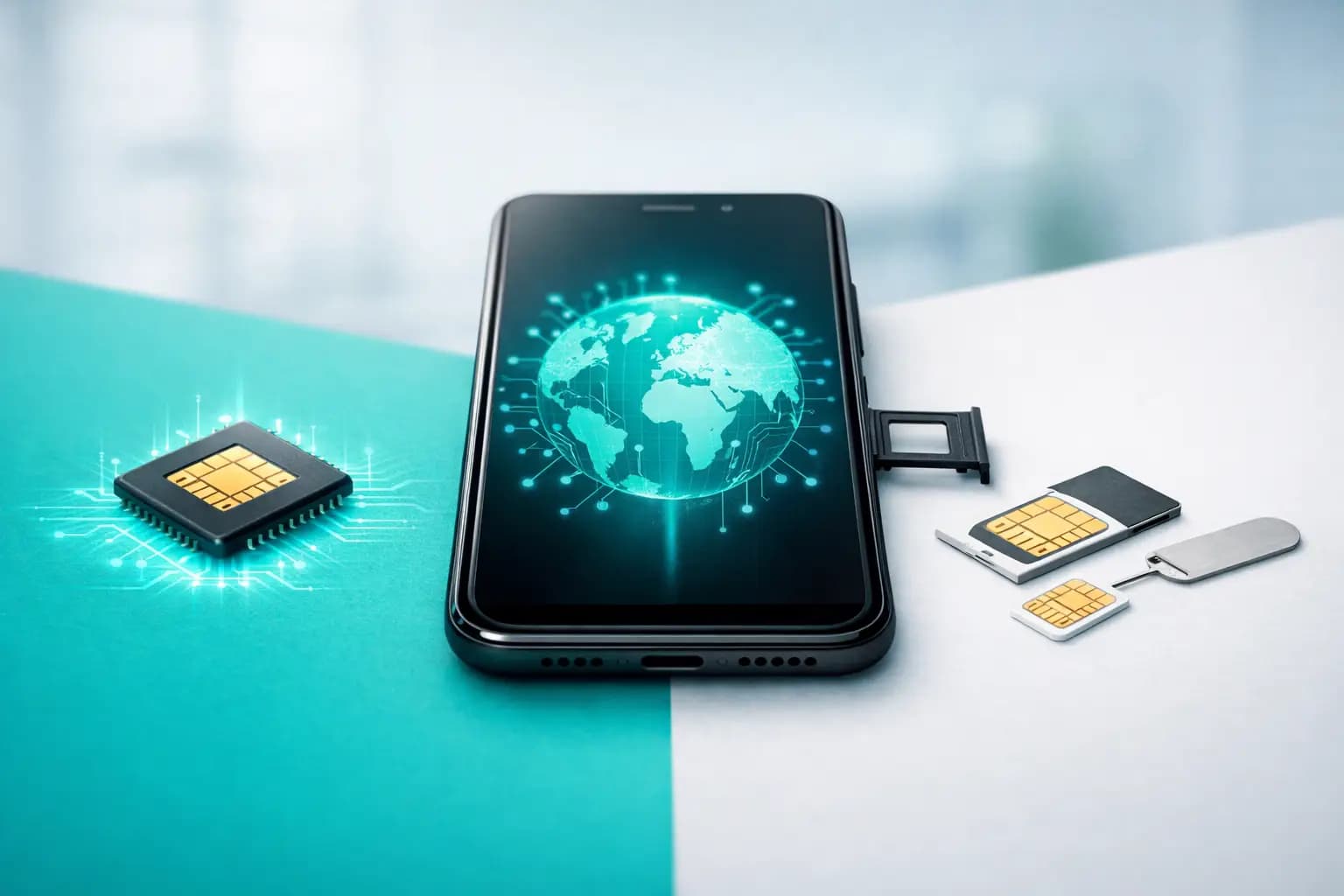
You have a new phone, a mobile plan ready to go, and one small choice left: eSIM or physical SIM? It sounds minor until you are hunting for a SIM tool, waiting for post, or realising your handset does not support the option you picked. The good news: neither is automatically better. One is built for flexibility; the other wins on familiarity and broad compatibility.
eSIM or physical SIM: the quick answer
An eSIM is a digital SIM built into your phone, tablet or smartwatch. Instead of inserting a plastic card, your network sends you activation details, usually as a QR code or through an app. Your mobile number and plan are then downloaded to the device.
A physical SIM is the removable plastic card most of us know well. Put it in the SIM tray, restart if needed, and your phone connects. Simple. It remains the right call for many people, particularly if they use an older handset, switch devices regularly, or just prefer something they can move themselves.
Here is the straight-talking version:
| If you care most about… | Usually choose… | Why | |—|—|—| | Getting connected quickly | eSIM | No card to wait for or insert | | Moving your number between phones | Physical SIM | Remove it from one handset and fit it in another | | Using a newer phone with two mobile plans | eSIM | Many handsets support a physical SIM plus one or more eSIMs | | Compatibility with older phones | Physical SIM | eSIM support is not universal | | Travelling with a second data plan | eSIM | Add a travel plan without removing your usual SIM | | Keeping things familiar | Physical SIM | It is the format most people already understand |
The choice should fit how you use your phone, not which option sounds more futuristic.
What changes when you use an eSIM?
The biggest benefit is speed. If your handset supports eSIM and your provider offers it, you can often activate a plan without waiting for a card to arrive. That is handy when you have just moved, need a replacement service quickly, or are setting up a new device for work.
eSIM can also make dual-SIM use far less fiddly. You might keep your usual UK number active while adding a separate data plan for a holiday. Or use one number for calls and another for work without carrying a second phone. Modern phones vary, though, so check how many eSIM profiles they can store and how many can be active at once. Stored and active are not the same thing.
There is a practical security upside too. A physical SIM can be removed if a phone is stolen. An eSIM is embedded in the device, so it cannot simply be popped out. That does not make your phone theft-proof, obviously. Use a strong screen lock, keep device tracking switched on, and contact your provider promptly if it disappears.
The catch comes when you change handsets. You cannot transfer an eSIM by moving a card across. Depending on the phone and network, you may be able to transfer it digitally, or you may need a fresh activation QR code. It is not difficult, but it is another step. If you swap phones often, physical SIMs are still gloriously low-tech and convenient.
eSIM is especially useful for travel
For frequent travellers, eSIM is a properly useful upgrade rather than a gimmick. You can keep your normal number available for calls, texts and banking codes while using a local or travel eSIM for mobile data. That helps avoid eye-watering roaming charges and the classic fear of losing your tiny UK SIM somewhere between the airport lounge and a hire car.
Before travelling, check whether your phone is unlocked and whether your main plan includes roaming in your destination. A second eSIM is flexible, but it does not override the terms of your existing mobile plan.
Why physical SIMs are not going anywhere just yet
Physical SIMs have one major advantage: they work in a huge range of devices. Older phones, basic handsets, many mobile broadband routers and some business equipment still rely on them. If your phone has a SIM tray but no eSIM support, there is no debate.
They are also easier when your phone dies or is damaged. Put your SIM into a spare compatible handset and, in many cases, you are back on calls and texts within minutes. With an eSIM, you may need access to your account, activation details, Wi-Fi and a working replacement device before you can get going again. Not a disaster, but not ideal when you are already having a bad Tuesday.
For families, a physical SIM can be the simpler option too. Passing down a handset to a teenager, setting up an emergency spare, or switching between phones during a repair is usually more straightforward when the service lives on a card.
That said, a physical SIM is not automatically easier in every situation. It can be lost, damaged or inserted the wrong way round. And while the plastic card is tiny, the amount of packaging and delivery involved is hardly thrilling when a digital activation would do the job.
Check these things before choosing eSIM or physical SIM
Do not choose based on the logo on the phone box. Check the details that can actually affect your service.
Is your device compatible?
Look up your exact model, not just the phone range. For example, newer versions of a handset may support eSIM while an older version with a similar name does not. Some models sold in different regions also have different SIM capabilities.
If you are buying a tablet, smartwatch, router or business device, compatibility matters even more. Many cellular devices accept only a physical SIM, while others are eSIM-only. A quick check before ordering saves a pointless delay.
Is your phone unlocked?
An unlocked phone can use a SIM or eSIM from another provider. A locked device may reject it. Most UK phones are sold unlocked now, but never assume, especially with second-hand or older handsets.
How often do you switch devices?
If you move between a work phone and personal phone, or keep a backup handset in a drawer, a physical SIM is often easier. If you tend to buy a phone, use it for years and want fewer little bits of plastic to manage, eSIM makes plenty of sense.
Do you need more than one number?
Dual SIM is useful for separating work and personal calls, keeping a UK number while abroad, or giving a household tablet its own data connection. Many phones let you combine a physical SIM with an eSIM. Others support two active eSIMs. The setup differs by model, so do not rely on a mate’s phone doing the same thing.
Switching networks: the SIM type is not the hard part
People often worry that moving to eSIM means moving their number becomes complicated. It should not. Keeping your existing mobile number is normally handled through the same switching process whether you choose a physical SIM or eSIM. The main difference is how your new service is activated.
With a physical SIM, you may receive a card in the post. With eSIM, you receive digital activation instructions. Either way, avoid cancelling your old service before your number transfer is complete unless you have been specifically told to do so. That is how people accidentally make a simple switch far more dramatic than it needs to be.
For business users, the operational question is bigger than one phone. Consider how quickly staff can be provisioned, what happens when devices are replaced, and whether your team needs reliable access to activation details. eSIM can speed up deployment, while physical SIMs may suit field devices and hardware that needs to be swapped at short notice.
Security and reliability: do not overthink it
Both options can be secure when you protect your account and device properly. The bigger risks are usually phishing messages, weak passwords and fraudsters persuading someone to make account changes – not the material your SIM is made from.
Use a unique account password, enable any available account security checks, and treat unexpected messages about SIM swaps or number transfers with suspicion. If your phone loses signal unexpectedly and you were not expecting a change, contact your provider using a trusted route. Fast action matters.
Reliability is broadly about the network, your coverage, your device and your plan – not whether the SIM is digital or plastic. An eSIM does not magically improve signal, and a physical SIM does not make a weak coverage area stronger. Choose the network and tariff that work where you live, work and travel, then choose the SIM format that makes managing it easier.
Make the choice that causes the least hassle
Choose eSIM if your phone supports it and you value quick activation, dual-SIM flexibility or easier travel data. Choose a physical SIM if you need maximum compatibility, regularly move your number between devices, or simply want the most familiar setup.
There is no medal for picking the newest option. The best SIM is the one that gets you connected without hidden faff, works with your device, and lets you get on with your day.