That phone socket on the wall has been doing its job for decades. Soon, it will not. The UK’s old copper landline network is being retired, and calls are moving to digital voice services that run through your broadband connection instead. This guide to digital voice switchover cuts through the jargon, flags the bits that can catch people out, and tells you what to check before your provider makes the change.
For most households, making and receiving calls will feel much the same. But the equipment behind the scenes is different, and that matters if you rely on a landline, have a pendant alarm, or live somewhere where mobile signal is patchy.
What is the digital voice switchover?
Traditional landlines use the Public Switched Telephone Network, often shortened to PSTN. It is old, costly to maintain and increasingly unable to support the services people expect. The network is due to be switched off by January 2027, so providers are moving customers to internet-based calling before then.
Digital voice is, in simple terms, a phone service delivered over broadband. Rather than plugging your handset into the old master socket, you normally plug it into the phone port on your broadband router. Your number can usually stay exactly the same.
This is not the same as being told you must give up your home phone. It means the technology carrying the call changes. If your broadband works and your router has power, your digital phone service should work too.
Why the switchover matters more than a new socket
A standard copper landline could often keep working during a local power cut because power came down the phone line. Digital voice depends on equipment in your home: typically the router, and sometimes an adapter or cordless phone base station. No mains power means no digital calls unless there is a backup in place.
That is the big difference, and it is why providers should identify customers who may be vulnerable or depend on their landline. If a household has no reliable mobile coverage, uses a health alarm, or needs a phone for emergency contact, do not treat the switchover letter as junk post. Speak to the provider early and explain the situation.
The other common snag is connected equipment. An older device may appear to use the phone line quietly in the background, until switchover day reveals it does not work as expected. Think alarm systems, telecare pendants, lift lines in communal buildings, fax machines, card terminals and some monitored security systems.
What will happen when your provider moves you
Your provider should contact you before a planned migration. The exact process depends on the service and equipment you have, but a typical home switchover involves receiving a compatible router or digital voice adapter, connecting your handset to it, and testing that incoming and outgoing calls work.
Some customers will need an engineer visit, especially where services are more complex or support needs have been identified. Others can make the change themselves in a few minutes. Read the instructions rather than assuming the old wall socket will continue to provide dial tone. On most digital voice services, it will not.
You should not normally lose your existing telephone number simply because your service is becoming digital. Keep a note of any activation date and avoid cancelling a landline separately while a migration or provider switch is in progress. That is how perfectly good phone numbers get accidentally lost. Telecoms has enough admin drama already.
The kit you may need
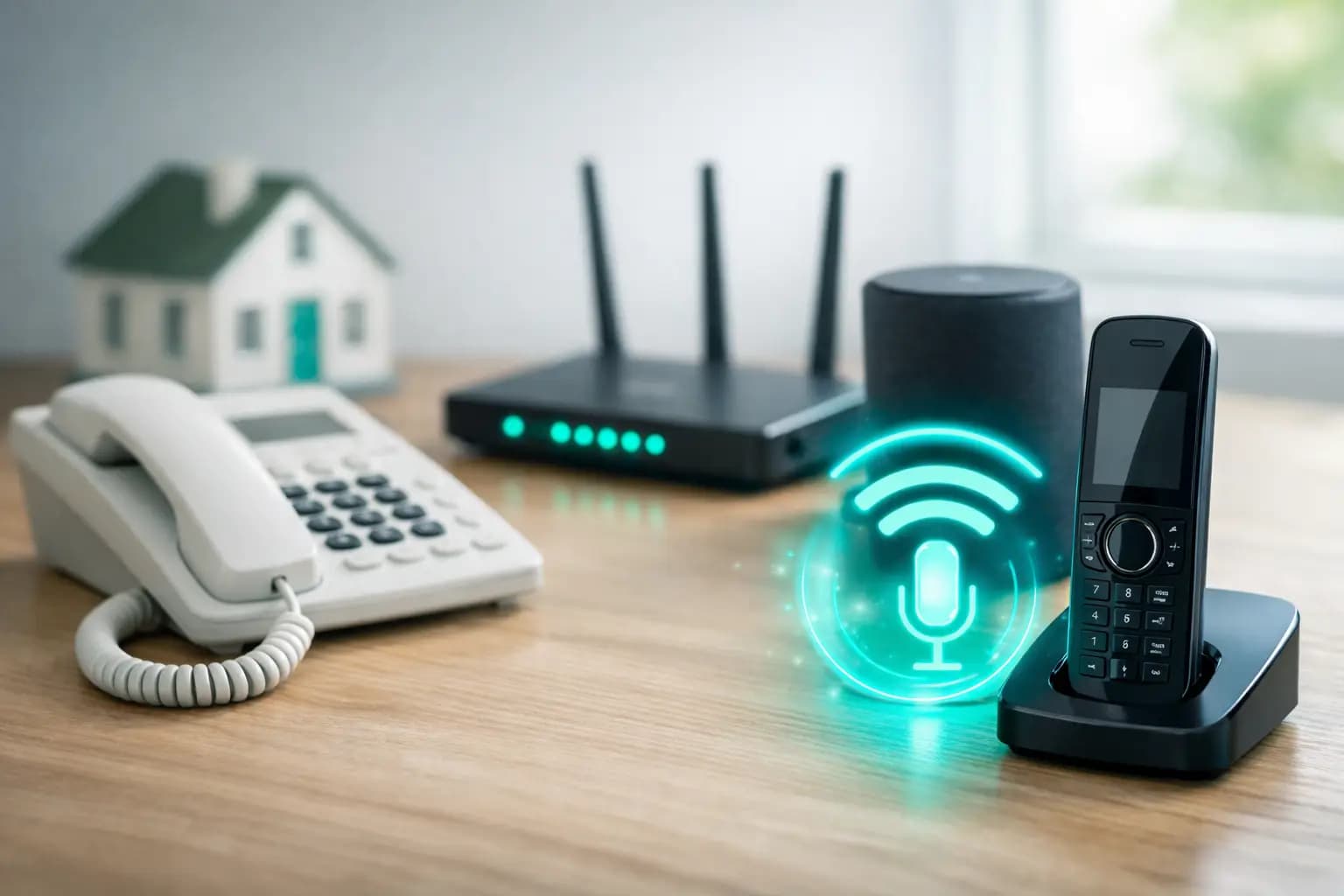
If you use a corded handset, it may plug directly into the router’s telephone port. If you use cordless phones, the base station usually plugs into that port instead. Some providers supply an adapter where required.
Check where your router sits. A phone in the hallway cannot stay connected if the router is upstairs in a study and the handset cable will not reach. A cordless system is often the simplest answer, but remember its base station also needs power. If you have several extension phones around the house, ask whether they will still work or whether you need a different setup.
Your digital voice switchover checklist
Do these checks before the planned date, not while trying to call support with a silent handset.
- Find every device connected to your landline, including telecare equipment, burglar alarms, payment terminals and fax machines.
- Contact the company that supplied each critical device and ask whether it is compatible with digital voice or needs an upgrade.
- Check mobile signal inside your home. Step into the rooms you actually use, not just the front door.
- Tell your phone provider if you have health, accessibility or emergency-contact needs, or if you cannot rely on a mobile phone during a power cut.
- Decide where the router and main handset should live, then make sure cables, sockets and Wi-Fi coverage suit that plan.
- Once switched, test an outgoing call, an incoming call and any essential connected device straight away.
Do not assume a neighbour’s experience will be identical to yours. Different providers use different routers, support arrangements and migration timetables. The principles are consistent; the practical steps can vary.
Power cuts: the question worth asking
A digital voice service needs electricity in the home. For a short outage, a charged mobile may be all you need. For somebody who depends on a landline to contact carers, family or emergency services, that may not be enough.
Providers have obligations to support customers who are at risk because they cannot make calls during a power cut. The right solution depends on the household. It might be a battery backup unit, an alternative communications arrangement, or tailored support based on the customer’s needs. Be clear about your circumstances and ask what protection is available, how long it lasts, and what equipment you are responsible for charging or testing.
A battery backup is not magic. It has a limited runtime, may not power every device in the home, and needs checking. Cordless handsets, Wi-Fi extenders and monitored alarms can introduce their own power requirements. If continuity matters, test the whole chain rather than only the router.
For emergency calls, keep a charged mobile available where possible. If mobile coverage is weak indoors, identify the spot in or around your property where it is strongest. It is a boring detail right up until it is not.
Broadband quality now matters to your phone too
Digital voice uses very little bandwidth compared with streaming, gaming or video calls. A normal call will not demand gigabit broadband. But your phone service is now tied to your connection and router, so reliability and responsive support carry more weight.
If your broadband is old, unstable or still running over copper, the switchover can be a useful prompt to review it. Full fibre is built for modern households where calls, work video meetings, streaming and smart devices all happen at once. Where available, it offers a more dependable foundation than ageing copper, along with much faster upload speeds for households sending files, gaming online or working from home.
The best package is not automatically the biggest number on an advert. A couple who browse, stream and make ordinary calls may need far less than a home full of gamers, 4K screens and remote workers. Look at the contract terms too. A low headline price is less impressive if inflation-linked rises and surprise charges are hiding in the small print.
Switching provider while moving to digital voice
You can switch broadband and home phone provider during this wider industry change, but timing matters. Let the new provider manage the switch where possible, especially if you want to keep your landline number. Cancelling first can make number retention difficult.
Before you order, confirm whether the new service includes digital home phone, whether calls are included or charged separately, and what happens to your existing handset. Ask about installation, activation dates and any early termination charges from the current provider. Straight answers beat a cheap deal that turns messy on day one.
Giant offers full fibre and digital home phone options with clear monthly pricing and UK-based support – useful when you want a human answer rather than a circular chatbot script.
Do not wait for the dial tone to disappear
The digital voice switchover is manageable for most homes, but it rewards a little preparation. Find the devices that rely on your line, make a plan for power cuts, and speak up if somebody in the household depends on being able to call for help. Sort those details now and the eventual change should feel like what it ought to be: a new connection, not a nasty surprise.