Your home number may have survived three house moves, several providers and a heroic number of nuisance calls. So, can I keep home number when switching broadband or moving home? Usually, yes. But the order you do things in matters more than most providers make clear.
A landline number can normally be transferred to a new provider through a process called number porting. The catch is that broadband, home phone and mobile services do not all switch in the same way. Cancel the wrong service too early and that familiar number can disappear before anyone has the chance to save it. Not ideal.
Can I keep home number if I change provider?
If you are staying at the same address, keeping your existing number is often straightforward. Your new provider requests the number from your old provider, then moves it onto the new home phone service. You should not need to contact the old provider to cancel the phone line separately.
That last point is worth underlining. Do not cancel your current home phone service before the port has completed. A number needs to be active to be ported. Once it has been ceased, it may be returned to the available number pool and recovery can be difficult, slow or impossible.
The process is usually easier when your new provider offers a digital home phone or VoIP service. Your existing geographic number – the one beginning 01 or 02 – can be hosted over your broadband connection rather than an old copper phone line. The calls still use your familiar number; the technology behind it has simply moved on.
There are exceptions. Some providers cannot port every type of number, especially if it is tied to a specialist alarm, lift line, payment terminal or an older business phone system. If the number matters to your work, medical contacts or a particularly persistent family group chat, ask whether it can be ported before placing the order.
Moving home? Your postcode can decide
Moving address is where number porting becomes less predictable. Your number is linked to a geographic area, not merely to you as the customer. If you move within the same local calling area, you may be able to take it with you. Move far enough away and the answer may be no.
For example, a number with a Manchester dialling code generally belongs in that local area. Taking it from one part of Greater Manchester to another may be possible. Taking it to Cornwall is far less likely to work, even if your new broadband provider can serve both homes.
This is not a provider being difficult for sport. Geographic numbers are allocated around UK numbering areas, and keeping the number outside its permitted area can create routing and regulatory complications. The new provider can check eligibility, but no one should promise a port until that check has been completed.
Timing matters too. Tell the new provider you are moving and want to retain the number as early as possible. Ideally, arrange the broadband and phone order before your old service ends. There can be a short gap while the new line is installed or activated, particularly if your new property needs fibre work, but a planned transfer gives you the best chance of keeping control.
What happens when the UK phone network goes digital?
The old analogue public switched telephone network is being retired across the UK, with the industry moving customers onto digital services. That does not mean you must give up your home number. In many cases, it means the opposite: number porting lets you keep it while moving to a more modern service.
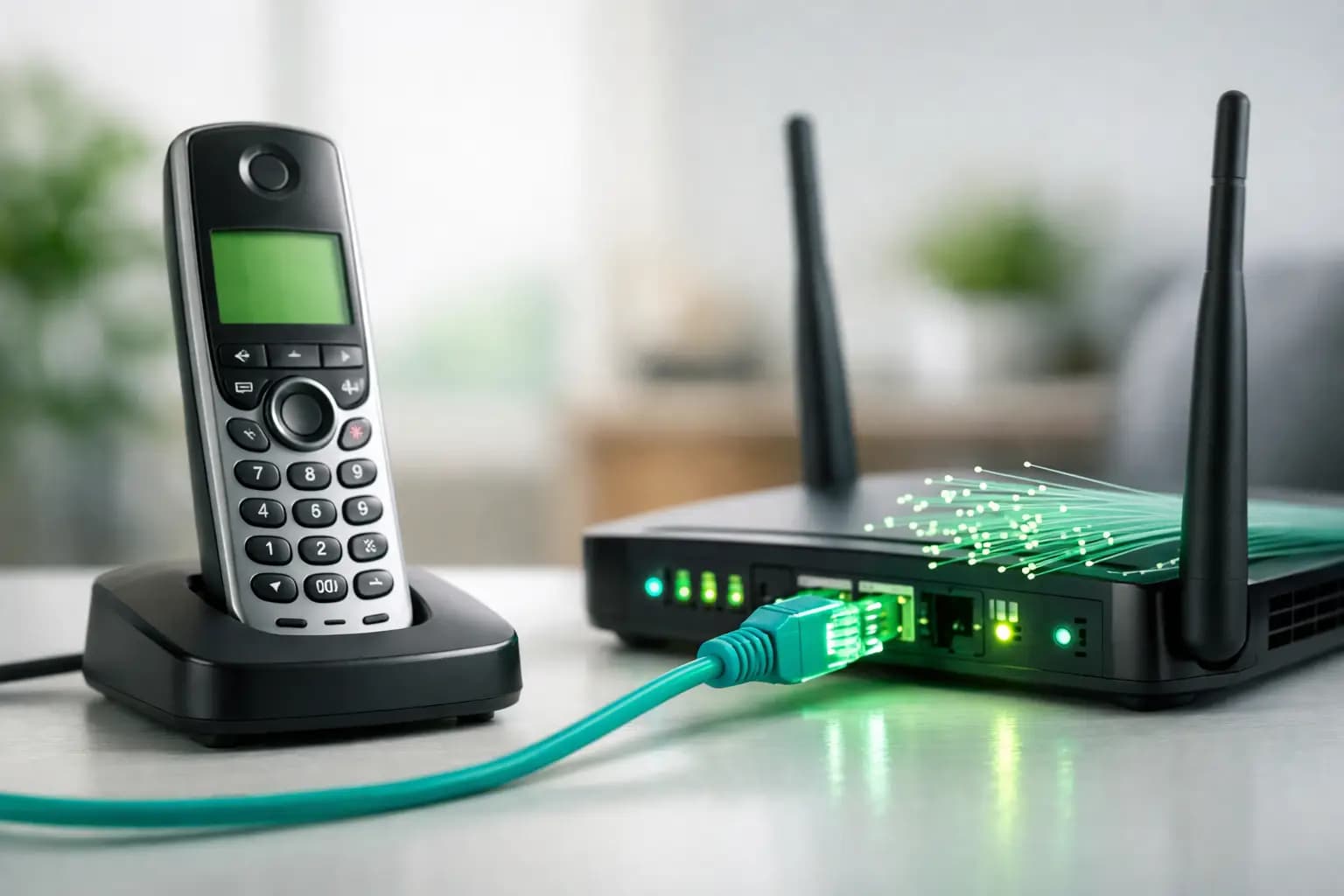
A digital home phone connects through your router or an adapter rather than the old wall socket. Calls are carried over your broadband connection, and the phone number remains yours while the service is active. For households changing to full fibre, this is often the cleanest route because full fibre does not use the old copper phone line in the first place.
There is a practical trade-off. A traditional landline could often keep working during a local power cut. A digital phone depends on mains power, plus your broadband equipment. If you rely on your home phone for emergency calls, have no reliable mobile signal or use a telecare device, raise this before switching. Your provider should discuss suitable resilience options, which may include battery backup or an alternative calling arrangement.
The switching rule that protects your number
Treat your home number as a separate item on the switching checklist, even when it comes bundled with broadband. A broadband order does not automatically mean a phone number will transfer.
Before you commit, confirm three things with the new provider: that it supplies a home phone service, that it can accept your specific number, and that it will submit the port request. Give the number exactly as it appears on your bill and make sure the account holder details match. A small mismatch in name, address or account information can delay the process.
Keep the old account open until you receive confirmation that the number has moved. On the day of transfer, you may have a short period when incoming and outgoing calls are interrupted. That is normal. What is not normal is being asked to cancel the line first and hope for the best.
If you are only changing broadband and intend to keep your existing phone service, say so. Some bundled switches can affect both services at once, while others leave the phone account running. Clear instructions beat a surprise bill or a vanished number every time.
When you might not be able to keep it
Porting is common, not guaranteed. The usual blockers are a move outside the number’s local area, a number that has already been disconnected, unsupported number types, or a provider that does not offer voice service at all.
There can also be complications where several services sit on the same line. Burglar alarms, monitored care devices, fax machines, door entry systems and business equipment may need checking before a digital migration. Some will work with the right adapter or configuration; others need replacing. Do not assume a dial tone means every connected device is ready for digital voice.
If your number cannot move, ask whether call forwarding can bridge the gap for a short period. It is not a permanent substitute for porting, and it may carry a charge, but it can help you update family, contacts and accounts without missing every call in the meantime.
How to give yourself the best chance
Start by finding a recent bill. It will show the exact phone number, the current provider, the account holder and the address attached to the service. Have those details ready when you order.
Next, ask for number-porting eligibility in writing or in the order confirmation. If you are moving, provide both addresses and your planned move date. Do not rely on a vague assurance that it is “probably fine”. Telecoms has enough surprises without adding a treasured home number to the pile.
Finally, keep your current service live, watch for porting updates and test incoming and outgoing calls once the transfer is complete. If your new home has full fibre available, a provider such as Giant can pair it with a digital home phone service, so the number people already know can travel with you where eligibility allows.
Your landline number is not just a string of digits. It may be the number your parents know by heart, the one tied to appointments, or the contact printed on years of paperwork. Ask the right questions early, keep the old line active, and switching broadband does not have to mean starting again.