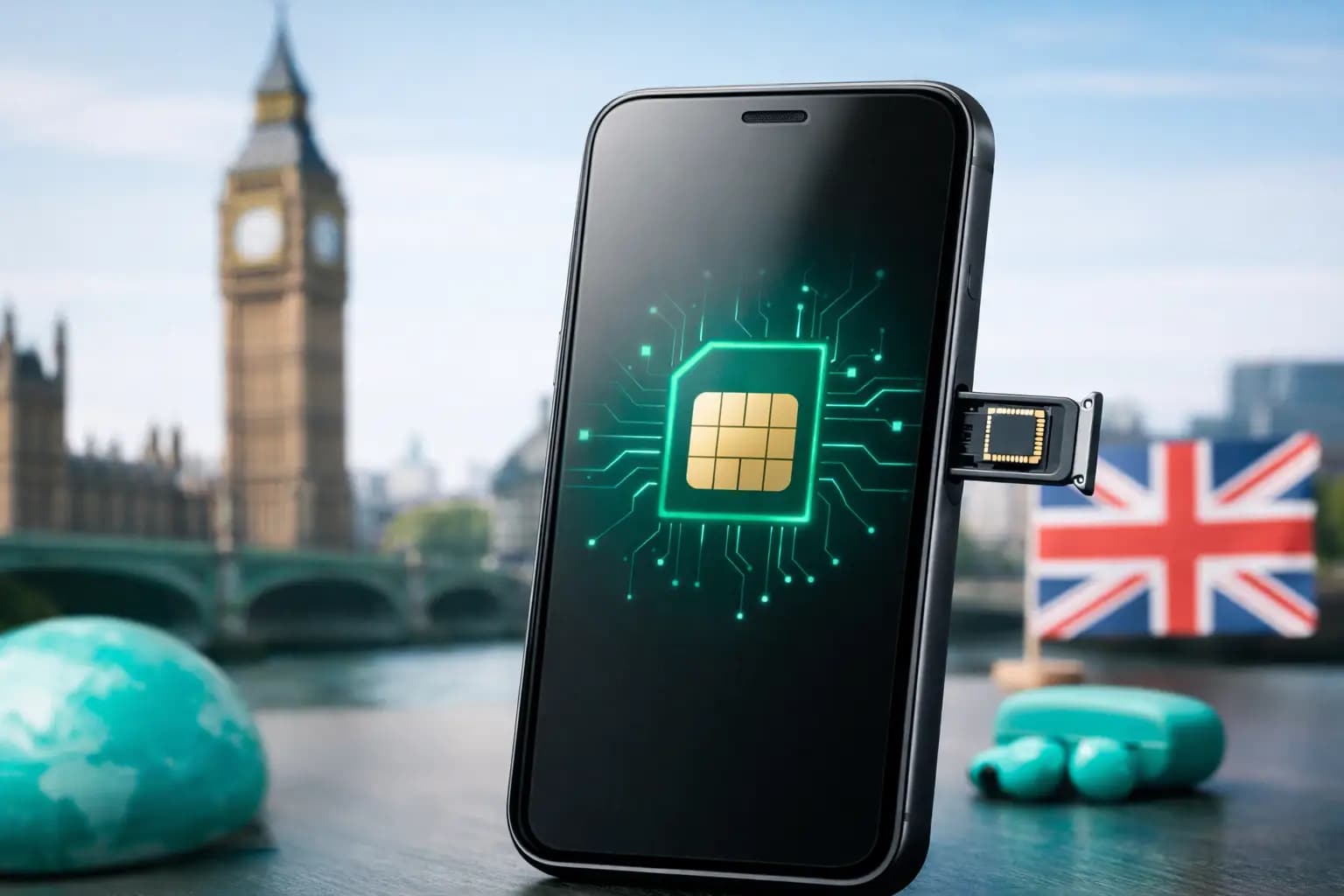
You used to need a tiny bit of plastic to join a mobile network. Snap it in, lose it under the sofa, order another one, swear a bit, carry on. eSIM changes that. If you’re asking what is eSIM UK, the short answer is this: it’s a digital SIM built into your device, letting you activate a mobile plan without a physical card.
That sounds small. It isn’t. For anyone switching networks, setting up a work number, travelling, or just wanting less faff, eSIM can make mobile service quicker and cleaner. But it’s not perfect, and it’s not always the right fit for every device or every user.
What is eSIM UK in plain English?
An eSIM is an embedded SIM. Instead of inserting a plastic SIM card into your phone, tablet, smartwatch or laptop, the SIM is already soldered into the device. You then download your mobile plan digitally, usually by scanning a QR code or following an app-based setup.
In the UK, eSIM works through mobile providers that support it. Once activated, your phone connects to the network just as it would with a normal SIM. Same job, different delivery method.
The key thing to understand is that eSIM is not a separate network or a special type of signal. It doesn’t magically improve coverage. It simply changes how your mobile service is installed and managed.
How eSIM works
Think of eSIM as software replacing a piece of plastic. Your device stores a digital SIM profile provided by your network. That profile contains the information needed to identify your account and connect you to calls, texts and mobile data.
On a supported phone, setup is usually straightforward. Your provider sends activation details, often as a QR code. You open the mobile settings, add the eSIM, confirm a few details, and the device downloads the profile. In many cases, you’re live within minutes.
That speed is a big part of the appeal. No waiting for the post. No poking about with a SIM tool. No real chance of putting the card in upside down because, thankfully, there is no card.
What is eSIM UK used for?
For most people, eSIM is used in one of three ways. The first is replacing a standard SIM on your main phone number. The second is running two numbers on one handset, often one personal and one for work. The third is adding a temporary mobile plan for travel.
That dual-number setup is where eSIM starts to earn its keep. Many compatible phones let you use one physical SIM and one eSIM together, or even multiple eSIM profiles stored on the device. That means you can keep your regular number while adding another plan for business calls or extra data.
Travellers like it because they can buy a local or regional data plan before they fly, rather than paying steep roaming charges or hunting for a shop at the airport. People who switch networks often like it because setup can be faster and less annoying.
eSIM vs physical SIM
A physical SIM and an eSIM do the same basic job. The differences are in convenience, flexibility and device handling.
A physical SIM is familiar and simple to move. Pop it out of one handset, stick it into another, and you’re done. That’s handy if you change phones often or swap devices for work. eSIM can be less immediate because transfer rules depend on the provider and device. Some transfers are smooth. Some are not. Telecoms loves a caveat.
eSIM wins on convenience when you’re getting started. There’s no plastic, less packaging, and often quicker activation. It also frees up internal space in devices, which is one reason manufacturers like it.
Security can be a point in eSIM’s favour too. A thief can’t physically remove the SIM as easily. That doesn’t make your phone theft-proof, obviously, but it removes one old-school trick.
The main benefits of eSIM
The biggest benefit is speed. You can buy and activate a plan without waiting for anything to arrive. If you need service quickly, that matters.
The second is flexibility. If your device supports multiple SIM profiles, eSIM makes it easier to juggle personal and work lines, or keep a UK number while using another plan for travel data.
The third is less clutter. No plastic card, no tray, no tiny bit of packaging pretending to be high tech.
For business users, eSIM can also simplify device deployment. If you’re setting up phones for staff, a digital process is often easier to manage than handling physical SIM stock and posting cards around the country.
The downsides people should know about
eSIM is convenient, but it’s not yet a flawless system. Compatibility is the first hurdle. Not every phone supports eSIM, especially older handsets and cheaper models. If your device doesn’t have eSIM capability, that’s the end of the discussion.
The second issue is network support. Not every provider offers eSIM on every plan, and support can vary by device type. A network may support eSIM for phones but not for smartwatches, or for consumer accounts but not every business setup.
Then there’s device switching. With a physical SIM, you can move your service in seconds. With eSIM, transferring to a new handset may require a fresh activation process. Usually manageable, sometimes mildly irritating.
If you’re the sort of person who changes phones regularly, uses spare handsets, or likes absolute simplicity, physical SIM still has a case.
Which devices support eSIM?
Many recent iPhones support eSIM, along with a good number of Samsung Galaxy and Google Pixel devices. Some iPads, smartwatches and laptops support it too. But this is where assumptions cause grief.
Not every model in a product range includes eSIM in every market. A phone bought abroad may have different SIM support from a UK version. Refurbished devices can add another wrinkle if the hardware variant isn’t what you expect.
So before buying a plan, check the exact device model and the provider’s compatibility list. Five minutes of checking beats an hour on hold listening to the same chorus loop.
Is eSIM good for travel in the UK and abroad?
Yes, often very. If you’re visiting the UK, eSIM can be a quick way to get connected without waiting for a physical SIM. If you live in the UK and travel abroad, it can help you add a local or regional data plan while keeping your main number active.
That said, the value depends on pricing. Some travel eSIM plans are excellent. Some are dressed up convenience with a premium slapped on top. Compare the allowance, validity period, roaming terms and whether calls and texts are included or it’s data-only.
For frequent travellers, eSIM is one of those bits of tech that quietly saves hassle. Not glamorous, just useful.
Is eSIM better for business users?
Often, yes. If you run a small business or manage a team, eSIM can make provisioning quicker and reduce the headache of distributing SIM cards. It also suits people who want separate business and personal numbers on one device.
But it depends on how your business works. If staff use rugged devices, older handsets, or frequently swap SIMs between phones, physical SIM might still be more practical. The smartest option is usually the one that creates less admin, not the one with the shinier label.
Should you switch to eSIM?
If your phone supports it and your provider offers it, eSIM makes a lot of sense for most people. It’s especially useful if you want faster setup, dual SIM flexibility, or easier travel options.
If you prefer swapping devices manually, use an older handset, or don’t want to deal with digital transfer steps, sticking with a physical SIM is perfectly sensible. Newer isn’t always better. Better is better.
For households and businesses tired of telecoms making simple things oddly painful, eSIM is at least moving in the right direction. Less plastic, less waiting, less nonsense.
What to check before choosing an eSIM plan
First, confirm your device supports eSIM. Second, make sure the provider supports eSIM on your exact handset and plan type. Third, check how transfers work if you replace your phone later. Finally, look at pricing properly, not just the headline number.
This is where transparent providers stand out. If the monthly price is clear, the setup process is clear, and support is easy to reach when something goes sideways, the technology does what it should do – save time rather than create fresh admin.
Giant offers eSIM alongside broadband and mobile services with the same straight-talking approach: clear pricing, UK-based support, and none of the usual telecom smoke and mirrors.
eSIM is not magic. It won’t fix poor coverage, and it won’t make a bad mobile plan good. But if you want a quicker, tidier way to get connected in the UK, it’s a solid option. The best bit is not that it feels futuristic. It’s that it cuts out one more silly little telecom hassle from your day.