The old phone socket on the hallway wall is heading for retirement. The future digital landlines will still let you ring family, call the GP and keep a familiar home number – but the call will travel through your broadband connection, not the ageing copper phone network.
That sounds like a minor technical change. For most homes, it is. But it also changes where your phone plugs in, what happens in a power cut, and what you need to check before moving provider. The copper switch-off is not a reason to panic. It is a reason to avoid being caught out by vague letters, rushed decisions and kit that does not suit your household.
What are future digital landlines?
A digital landline is a home phone service delivered using Voice over Internet Protocol, usually shortened to VoIP. Instead of sending your voice over the old analogue Public Switched Telephone Network, your provider converts it into data and sends it across your broadband connection.
You still use a handset. You can usually keep your existing phone number. You still dial 999, 111 and ordinary UK numbers in the usual way. For day-to-day calling, the experience should feel reassuringly normal.
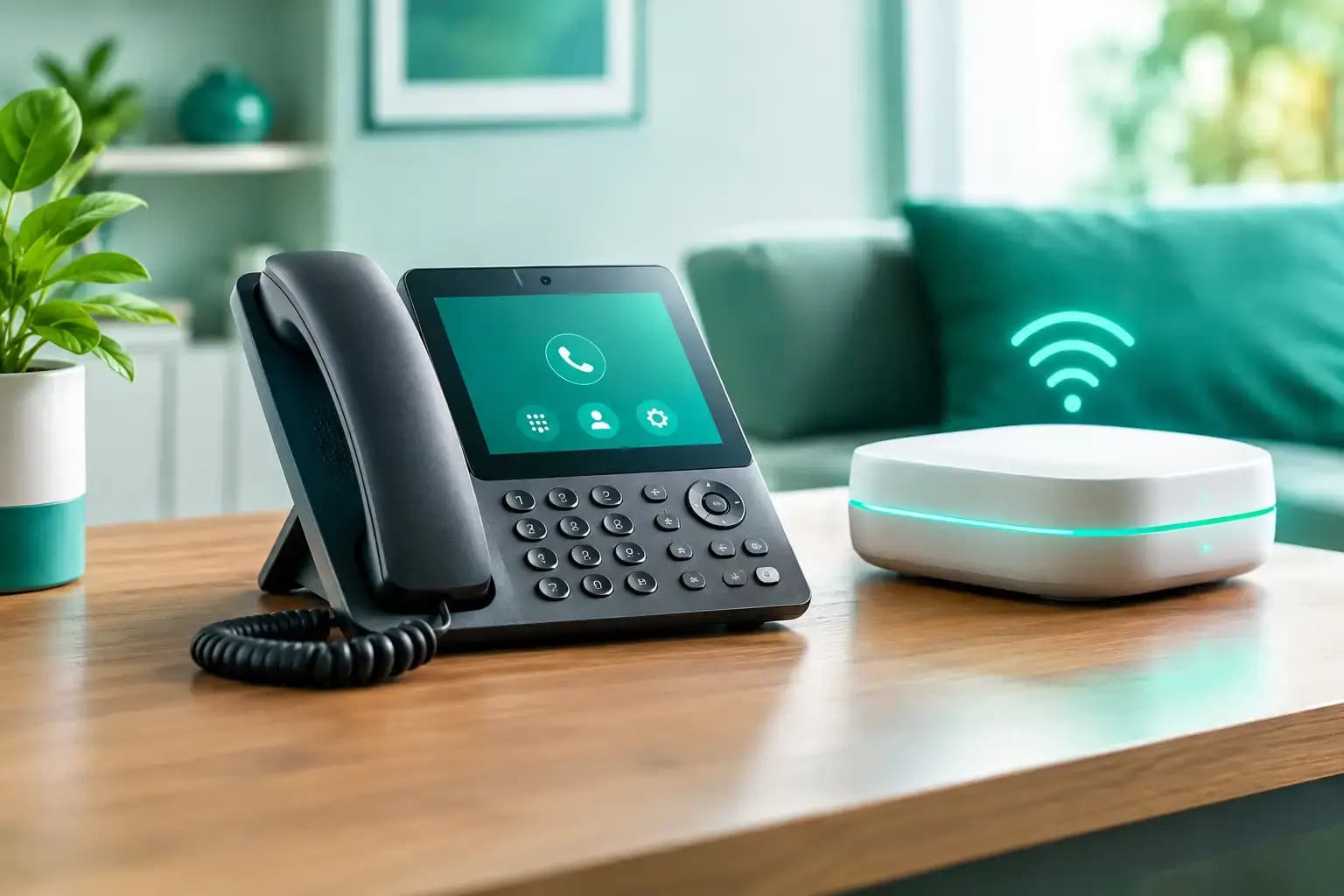
The difference is behind the scenes. Your phone may connect to the router, an adaptor supplied by your provider, or a dedicated digital phone hub. That means your broadband and phone service are now much more closely linked. If one is not set up properly, the other may be affected too.
The UK is moving away from traditional copper-based phone services, with the old network due to close by January 2027. It has been doing the job for decades, but it was built for a different era – one before video calls, cloud tools, smart devices and whole households streaming at once. Keeping it going is expensive. Building around fibre and IP technology makes far more sense.
Digital landlines versus the old phone line
| What changes | Traditional landline | Digital landline | |—|—|—| | How calls travel | Copper phone network | Broadband connection | | Where the handset plugs in | Main phone socket | Router, adaptor or phone hub | | During a power cut | Often continues to work | Usually needs backup power | | Number portability | Usually possible | Usually possible, if arranged correctly | | Extra features | Limited | Often easier to add or manage |
The power-cut row deserves your attention. An old copper landline could draw enough power from the exchange to make a basic corded phone work when the lights were out. A digital phone depends on local equipment: your router, fibre terminal and phone hub all need electricity.
For plenty of households, that is not a major issue. Power cuts are uncommon and a charged mobile is already the backup. But it is a different conversation for someone who depends on their home phone for health, accessibility or personal safety reasons. Providers have obligations to identify and support vulnerable customers, which can include battery backup or another suitable solution. Do not assume. Ask directly, and explain how the phone is used at home.
What a good digital home phone should actually deliver
The technology is newer. The basics should not become harder.
A decent digital landline should offer clear calling, simple setup, sensible call features and a clear answer on emergency-call resilience. It should also tell you, in plain English, whether your existing handset will work. Many standard cordless phones can be used through an adaptor, although models vary and you may need to place the main base station near the router.
For households with poor indoor mobile signal, a home phone remains genuinely useful. It can be easier to hear than a mobile, easier for older relatives to use, and a dependable number for schools, doctors and deliveries. The idea that everyone has abandoned landlines is more marketing myth than household reality.
Digital calling can also be a better fit for modern homes. Features such as voicemail, call blocking, caller display and call forwarding are easier to provide on an IP-based service. Some providers can give you a virtual landline, letting calls ring through to a mobile or multiple devices. Handy for small businesses, landlords and anyone who wants a professional number without another physical line.
Still, do not pay for bells and whistles you will never use. If all you want is a straightforward handset in the kitchen and a number everyone already knows, straightforward is what you should get.
Before switching to a digital landline, check these four things
A move to digital calling is often bundled into a broadband switch. That can make installation tidier, but it also gives providers plenty of opportunity to bury practical details in the small print. Check the following before agreeing to anything.
- Your number: Tell the new provider you want to keep it before cancelling the old service. Cancelling first can make number transfer much harder, or impossible.
- Your equipment: Ask where your phone connects and whether your current handset, extension sockets, alarm system or telecare device needs an adaptor, engineer visit or replacement.
- Power-cut support: If the landline is essential, ask exactly what backup is available, how long it lasts and what equipment it covers.
- Your contract: Look beyond the headline monthly price. Check call charges, activation fees, the contract term, price rises and what happens if broadband availability changes.
That last point matters because a cheap-looking package can become less cheap very quickly. Inflation-linked rises and add-ons are not clever pricing. They are just a bigger bill arriving later. Clear monthly pricing means you can compare services without needing a spreadsheet and a strong cup of tea.
Broadband quality now matters to your phone calls
Digital landlines do not demand massive download speeds. A clear voice call uses very little bandwidth compared with 4K streaming or online gaming. But a stable connection matters, especially in busy homes.
If someone is on a work video call, another person is gaming and the television is streaming, a poorly managed connection can struggle with congestion or latency. Full fibre is built to handle more capacity than old copper broadband, and symmetric speeds can be especially useful where homes upload as much as they download – video meetings, cloud backups, security cameras and content creation all count.
The right package depends on your address and usage. A one-person flat with light browsing has different needs from a household running several screens, smart devices and remote workstations. Bigger numbers are not automatically better value. But choosing a connection with enough headroom stops the home phone becoming another thing that fails when everybody is online.
At Giant, the point is not to make telecoms sound mysterious. It is to offer the right network where it is available, explain the price properly, and have a UK team available when you need a human answer rather than an endless menu.
Do not forget alarms, lifts and care equipment
The move away from analogue lines affects more than handsets. Older burglar alarms, payment terminals, monitored care devices, door-entry systems and lift emergency phones may have been designed around a traditional phone line. Some will work over a digital service with the right configuration. Some need an upgrade. Some should use a mobile or dedicated connection instead.
If you are a landlord, letting agent or business owner, this is worth auditing before a tenant or customer finds a problem. Start with every device connected to a phone socket, then contact the equipment supplier rather than relying on a generic promise that it will be fine. A lift alarm or telecare unit is not an area for guesswork.
For home users, the same principle applies to pendant alarms and monitored services. Tell both your telecoms provider and the device provider about the planned change. A proper test after installation is far better than discovering an issue during an emergency.
The future is not phone-free – it is more flexible
People will keep calling in different ways: mobile, video, messaging app, desk phone and home handset. Digital landlines earn their place by doing one job reliably: giving a household or business a stable, recognisable number that is not tied to one person’s mobile contract.
The best move is not necessarily the flashiest package. It is the one that keeps your number, works with the equipment you rely on, has a credible plan for power cuts, and comes with pricing that does not change character halfway through the contract. Ask those questions before the old socket goes quiet, and the switch becomes what it should be: a sensible upgrade, not a domestic drama.