If your video calls freeze when someone sticks the kettle on Netflix, this is the real fibre broadband vs copper test. Not the glossy advert. Not the headline speed. Just whether your connection copes when normal life happens.
For plenty of UK homes and small businesses, copper still limps along well enough for email and a bit of browsing. But “well enough” is doing a lot of heavy lifting now. Households stream in 4K, kids game online, parents work from home, doorbells upload footage, and cloud backups quietly chew through bandwidth in the background. That is where the gap between fibre and copper stops being technical trivia and starts affecting your day.
Fibre broadband vs copper: the real difference
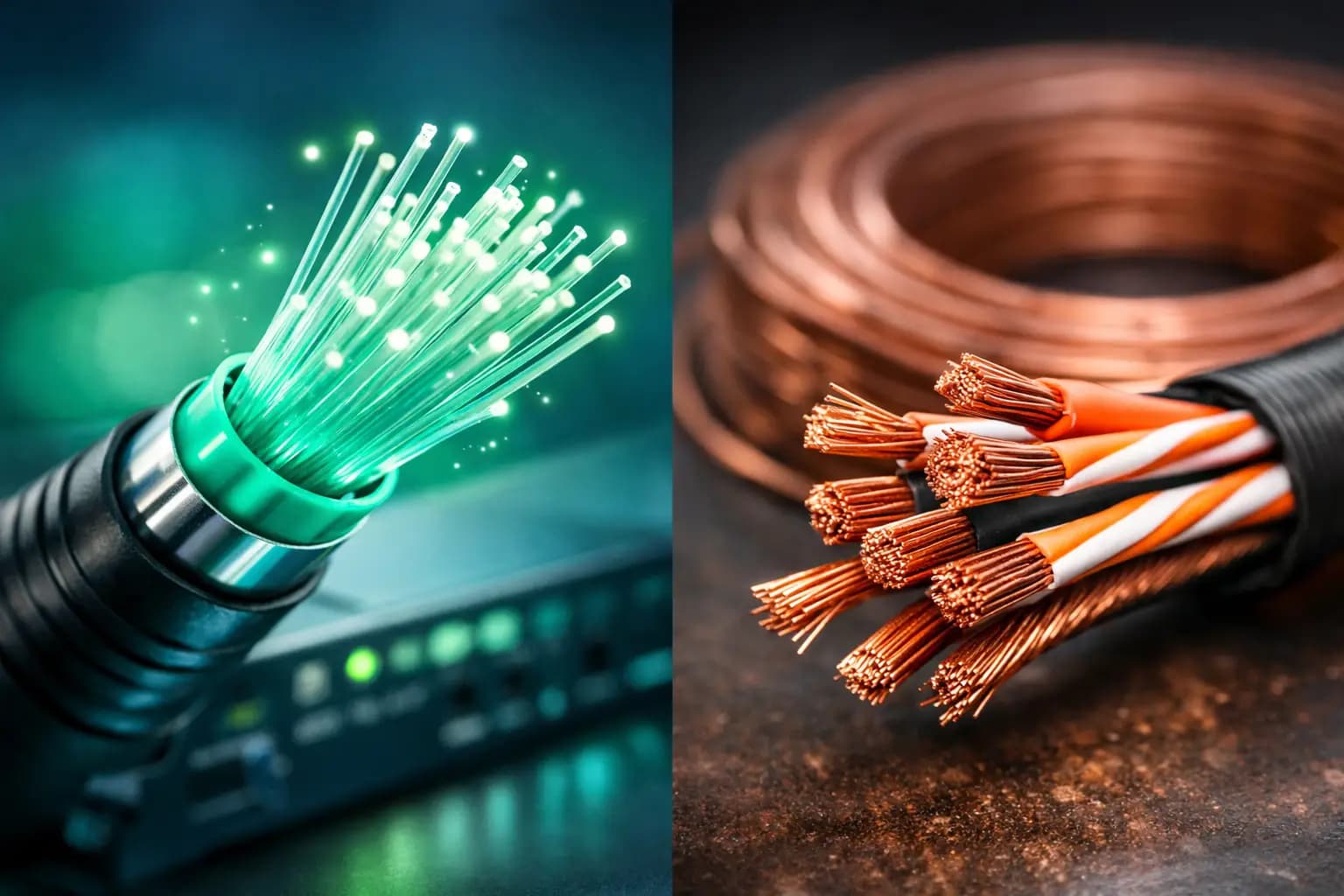
The simplest way to look at it is this: copper broadband sends data over electrical signals through old metal phone lines, while fibre uses pulses of light through glass cables. One is older, more limited and more vulnerable to distance and interference. The other was built for modern internet use.
That does not mean every copper connection is unusable or every fibre package is automatically perfect. It does mean fibre has a much higher ceiling for speed, stability and future capacity. If you have ever been sold a package that sounds quick on paper but slows down when the house gets busy, there is a good chance the underlying network is the problem.
Copper connections often include ADSL or FTTC, where fibre only reaches the street cabinet and the final stretch into your property still runs over copper. Full fibre, often called FTTP, replaces that last stretch too. That final stretch matters more than providers sometimes let on.
Why speed is only half the story
Speed gets all the marketing, but it is not the only thing worth checking. Yes, fibre is faster – often dramatically so. Full fibre can offer hundreds of megabits per second or even multi-gigabit speeds, while copper-based services are far more constrained, especially on upload.
But raw download speed is only one piece of the puzzle. Upload speed matters for Teams calls, sending large files, cloud CCTV, backing up photos, and anyone running a business from home. This is one of the biggest differences in the fibre broadband vs copper debate. Copper services usually give you lopsided performance: decent-ish download, much weaker upload. Full fibre can offer far stronger uploads, and in some areas symmetrical speeds too, where upload and download are the same.
That matters more than most people expect. A family of four can tolerate a slower movie download. They notice very quickly when a work call breaks up because somebody else is uploading a batch of files.
Reliability is where copper starts to look dated
Copper was not designed around the way we use the internet now. It was built for telephone lines, then stretched to carry broadband. Clever engineering kept it going for years, but there is only so much polish you can put on old infrastructure.
The longer the copper line from cabinet to property, the more performance can drop. Signal quality can also be affected by line condition, interference and weather. That is why two neighbours on the same package can have noticeably different experiences.
Fibre is generally more consistent because it is less affected by electrical interference and distance over the access network. That does not make it immortal. Home wiring, router quality and local issues can still cause problems. But as a delivery method, fibre is far better suited to stable broadband.
If you work from home, run card payments, manage tenant Wi-Fi, or depend on cloud software all day, reliability is not a nice extra. It is the difference between getting on with work and losing an afternoon to avoidable faff.
Latency, gaming and all the stuff people feel before they understand it
A lot of people cannot explain latency, but they can absolutely feel it. It is the delay between your device sending a request and the network responding. Lower latency means snappier video calls, smoother gaming and quicker response across cloud services.
Copper can be perfectly serviceable for casual use, but fibre usually offers lower and more stable latency. That means fewer spikes, less jitter and a better experience when timing matters. Competitive gaming is the obvious example, but it also affects remote desktop sessions, VoIP calls and live collaboration tools.
So if your internet feels oddly sluggish even when a speed test looks respectable, copper may be the reason. Broadband is not just about how fast it can go flat out. It is about how cleanly and consistently it behaves minute to minute.
Fibre broadband vs copper for different households
If you live alone, mostly browse, and only stream occasionally, a copper connection might still do the job. There is no prize for buying more than you need. Straight talking means saying that as clearly as possible.
But once a home has multiple people, multiple devices and multiple expectations, fibre starts to make far more sense. Streaming-heavy families, gamers, renters in shared houses, and remote workers all benefit from the extra headroom. You stop rationing bandwidth. You stop asking who is downloading what. Your broadband becomes less of a household negotiation.
For flats, student accommodation and landlord-managed properties, fibre also helps future-proof connectivity. Tenants increasingly expect broadband to work properly from day one, not after a week of troubleshooting and a call-centre script.
What businesses should watch out for
For SMEs, the choice is rarely just about headline speed. It is about continuity, upload performance, voice quality and how much pain a bad connection causes across a normal week.
A copper-based service may be cheaper in some cases, but the savings disappear fast if staff lose time, cloud apps lag, or VoIP calls sound like they are being made from the moon. Full fibre gives businesses more breathing room, especially if they rely on shared platforms, hosted phones, CCTV, guest Wi-Fi or regular file transfers.
That said, not every business needs the same thing. A small office with light usage may be fine on a standard fibre package. A multi-site firm, busy practice or high-dependency operation may need a leased line instead. The point is not to buy the fanciest option. It is to match the connection to the cost of failure.
The pricing trap: cheap now, annoying later
Copper can look cheaper at first glance, especially when compared with premium full fibre packages. But this is where broadband buying often goes off the rails. A low monthly figure is only useful if the service performs and the contract stays honest.
When comparing fibre and copper, check the actual term, setup fees, mid-contract rises, and whether the speed available at your address reflects the ad rather than the reality. Some providers still love a bargain headline followed by the small-print sting. That gets old quickly.
A better question is value over the contract term. If fibre costs a bit more but gives you stronger performance, fewer dropouts, better uploads and less time wasted chasing support, it is often the smarter buy. Broadband should not be a recurring argument on your household budget spreadsheet.
Is copper on the way out?
Broadly, yes. The UK telecoms market is moving away from legacy copper infrastructure, and for good reason. Demand has changed, networks are being upgraded, and old phone-line technology is gradually being retired.
That does not mean copper disappears overnight or that every property can get full fibre tomorrow. Coverage still depends on local network build-out. But the direction of travel is obvious. Investing in copper now is a bit like putting fresh money into a format everyone is steadily leaving behind.
If fibre is available at your address, it is usually the better long-term call. Not because it sounds flashier, but because it aligns with where connectivity is heading.
So which should you choose?
If your connection only needs to handle light use and fibre is not yet available, copper may still be a workable stopgap. No drama, no scare tactics. It can serve a purpose.
But if you want broadband that keeps up with modern life rather than negotiating with it, fibre wins on speed, upload performance, latency, reliability and long-term value. That is the honest answer in the fibre broadband vs copper comparison. Copper had a good run. It is just no longer the standard to aim for.
Providers matter too. The right network is one thing, but clear pricing, proper support and a package that suits how you actually use the internet make a real difference. Giant is built around that idea – fast fibre, straightforward terms, and people who actually answer the phone.
The best broadband choice is the one you stop thinking about because it simply works. That is a far better benchmark than any advert with a rocket in it.