The VoIP vs traditional landline question is no longer just one for tech enthusiasts or call-heavy businesses. If you still have a phone socket on the wall, the UK’s analogue phone network is being switched off. That means many households and businesses will move to a digital phone service anyway – so it pays to choose one that actually suits how you communicate.
For some people, a home phone is mainly there for calling relatives, the GP or emergency services. For others, it is a business number that must ring wherever the team happens to be. Both need dependable calls. But they do not need the same setup.
VoIP vs traditional landline at a glance
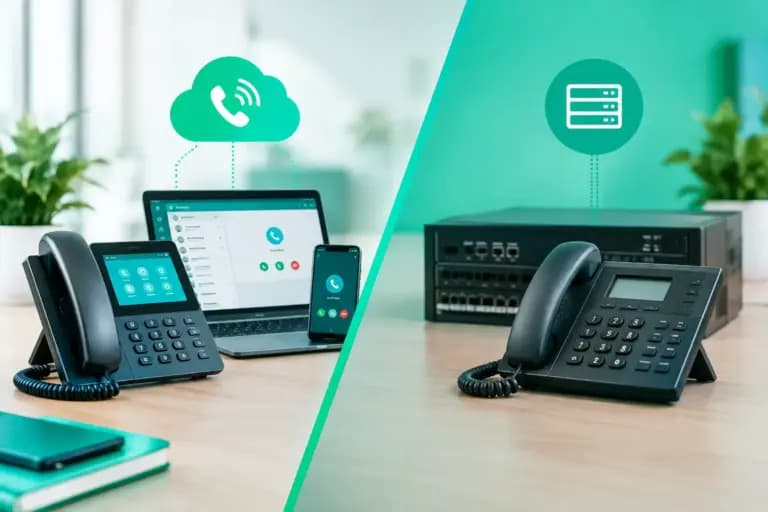
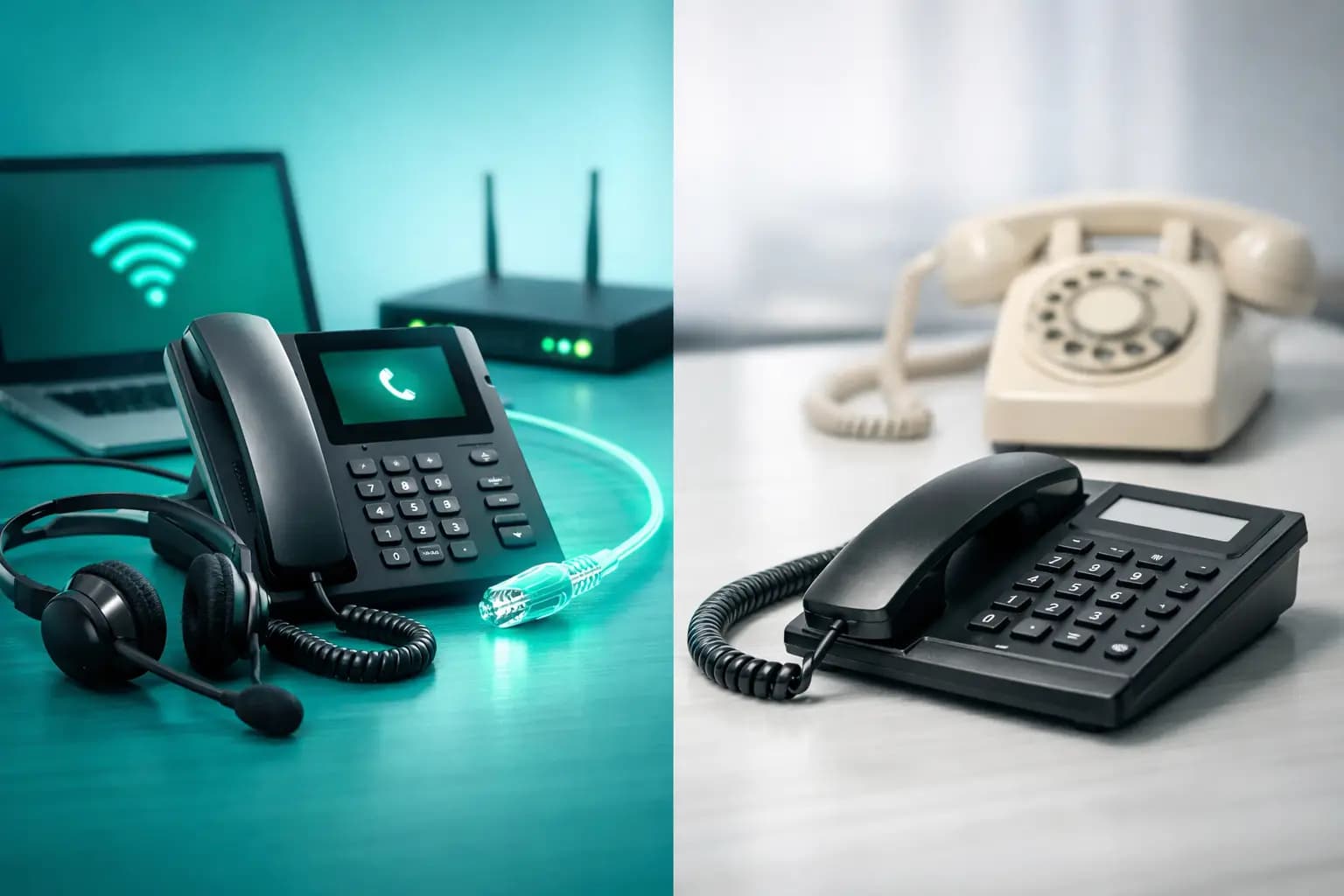
A traditional landline sends voice calls over the old copper-based public switched telephone network, often called the PSTN. It has been around for decades, and it was built to keep working even when your broadband was having a bad day.
VoIP stands for Voice over Internet Protocol. Rather than using the old phone network, it turns your voice into digital data and sends it through your broadband connection. You can make calls using a desk phone, cordless handset, computer or mobile app, depending on the service.
| What matters | VoIP | Traditional landline | |—|—|—| | Network | Broadband internet connection | Legacy copper phone network | | UK future | Built for the digital switchover | Being retired | | Equipment | IP phone, adapter or app | Standard phone plugged into a wall socket | | Flexibility | Use the same number across locations and devices | Tied to one physical line | | Power cuts | Needs broadband equipment and power, unless backed up | Often works without mains power | | Features | Usually broad and easy to manage | Usually basic or chargeable extras |
The most important point is simple: the old PSTN is due to close by January 2027. Providers are already moving customers away from analogue services. A phone that looks and feels like a conventional landline may now run over broadband behind the scenes. The handset is familiar. The technology is not.
Why VoIP is winning the long game
VoIP is not automatically better because it is newer. It wins because it is designed for the way people now live and work.
A household can keep its existing phone number while making calls through a broadband router. A small business can present a professional local or national number without paying for a separate physical line at every site. A remote worker can take a work call on a laptop or mobile app instead of being chained to a desk in the spare room.
Features are a big part of the difference. With VoIP, call forwarding, voicemail to email, caller display, call groups, auto-attendants and virtual numbers are often straightforward to add. On a traditional line, those same features can be limited, clunky or charged as separate extras. Nobody needs a telecom archaeology project just to redirect calls during annual leave.
Cost can also be easier to understand. VoIP does not require providers to maintain the ageing dedicated voice infrastructure that traditional lines rely on. That can make packages more competitive, especially for businesses with several users or locations. It is still worth checking the details, though: inclusive call allowances, international calls, handset costs and any setup fees all matter.
For businesses, the operational benefit is often bigger than the monthly saving. Staff can move desks, work from home or open a second location without dragging a new telephone line through the process. Admin is usually handled from an online portal rather than through a support queue that has apparently entered another dimension.
Where a traditional landline still has an edge
The classic copper landline has one very real strength: it is independently powered from the exchange. If there is a local power cut, a basic corded phone may still work when your router, Wi-Fi and mobile charger do not.
That matters for people who rely on a phone for medical reasons, have poor mobile coverage at home or simply want an extra layer of reassurance. It also matters for some legacy equipment. Older alarm systems, lift lines, door entry systems, payment terminals and care devices may not work correctly over a standard VoIP service without testing or an upgrade.
But this is a temporary advantage, not a reason to ignore the switchover. Traditional analogue lines are being withdrawn. The better question is how to make a digital replacement resilient enough for your needs.
Reliability is about the whole connection
People often ask whether VoIP is reliable. The honest answer is: it depends on the broadband, the equipment and the setup.
On a stable full fibre connection, VoIP call quality is typically excellent. Voice traffic uses very little bandwidth. Even a busy household streaming telly, gaming and taking video calls should not struggle to carry a phone conversation when the connection is properly provisioned.
The risk is not that VoIP eats all your bandwidth. The risk is interruption. If your broadband fails, your router crashes or the power goes out, your VoIP phone may stop working. A cheap, overloaded Wi-Fi setup can also create delay, crackling or dropped calls.
That is why a good setup matters. For a home, this may mean placing the router sensibly, using a wired connection for a desk phone where practical and keeping a charged mobile available. For a business, it can mean battery backup, 4G or 5G failover, call forwarding to mobiles and a router configured to prioritise voice traffic.
If you need to be able to contact emergency services during a power cut, tell your provider before migration. Providers have processes to identify vulnerable customers and discuss suitable support, which may include a battery backup solution or another arrangement. Do not assume every digital phone service behaves the same way.
Choosing the right option for your home
If your home phone gets occasional use and your broadband is dependable, VoIP is usually the sensible choice. You get a future-ready service without losing the familiar habit of picking up a handset and dialling.
Before switching, check whether you want to keep your existing number. In most cases, number porting is possible, but do not cancel the old service before the transfer is agreed. Ask how the phone connects too. Some services plug into the back of your router, while others use an adapter or dedicated IP handset.
Also check any connected devices. If you have a monitored alarm, telecare unit or door entry system, contact the equipment provider. “It has always worked” is not a compatibility test.
What businesses should look for
For a business, choosing VoIP is less about replacing a phone line and more about designing how calls should flow. A sole trader may only need a professional number and voicemail. A growing team may need a main menu, department call groups, reporting and the ability to answer calls from anywhere.
Start with the customer journey. When someone rings, who should answer? What happens if nobody is free? Should calls ring a desk phone and mobile together? Do you need calls recorded, or is that unnecessary for your work? The right answers prevent you paying for a feature pile you will never use.
You should also ask about resilience, porting times, support and contract terms. Cheap headline pricing loses its shine quickly if a provider adds surprise charges, makes number transfers painful or vanishes when calls are not routing correctly. For multi-site firms, landlords and managed properties, central administration and quick provisioning can be just as valuable as the call tariff.
The verdict: plan for digital, not nostalgia
A traditional landline is familiar, but familiarity is not a long-term technology plan. The UK phone network is changing, and VoIP is the practical replacement for most homes and businesses. It offers more flexibility, more useful features and a clearer route to scaling without adding another dusty box to the comms cupboard.
The caveat is power resilience. If a phone is essential during an outage, build that requirement into the switch rather than discovering it after the lights go off. Choose a provider that explains the setup plainly, checks compatibility and answers the phone when you need help. Giant is small enough to do that, and direct enough to tell you when a backup plan is worth having.