The old phone socket on the wall is being retired. That does not mean your home phone number has to disappear with it. If you are asking how does digital home phone work, the short answer is that your calls travel through your broadband connection rather than the old copper telephone network.
It is a change in the plumbing, not necessarily in how you use the phone. You can often keep your existing number, call the same people and use a familiar handset. The difference is that your phone needs broadband and, in most setups, mains power to make and receive calls. That last bit matters more than the glossy adverts tend to admit.
How does a digital home phone work?
A digital home phone uses Voice over Internet Protocol, usually shortened to VoIP or Digital Voice. When you speak, your handset turns your voice into small pieces of digital data. Your router sends that data over your broadband line to the phone provider’s network, where it is connected to the person you are calling.
The same thing happens in reverse when somebody rings you. The provider routes the call through your broadband connection, and your handset rings just as it did on a traditional landline.
For most households, it feels ordinary because the clever bit happens in the background. The meaningful differences are the equipment, the dependency on broadband and the features your provider can offer.
Your number can usually move with you
If you already have a landline number, it can normally be transferred to your new digital phone service. This is called number porting. Do not cancel the old phone service before the transfer is confirmed, or you could make the move harder than it needs to be.
The porting date is usually arranged as part of the switch. There may be a short interruption while the number moves, but it should not mean days of missed calls. If your home number is used for a relative, a door entry system or an alarm service, tell your provider before the switch so the setup can be checked properly.
What equipment do you need?
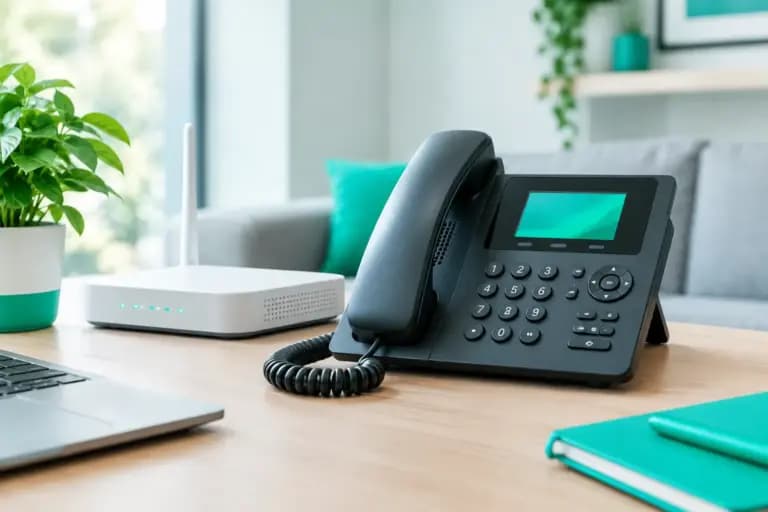
The answer depends on the service supplied, but the kit is usually pleasantly simple. Your broadband router provides the internet connection. From there, you either plug a phone into a phone port on the router, use a small adapter, or connect an IP phone directly to your home network.
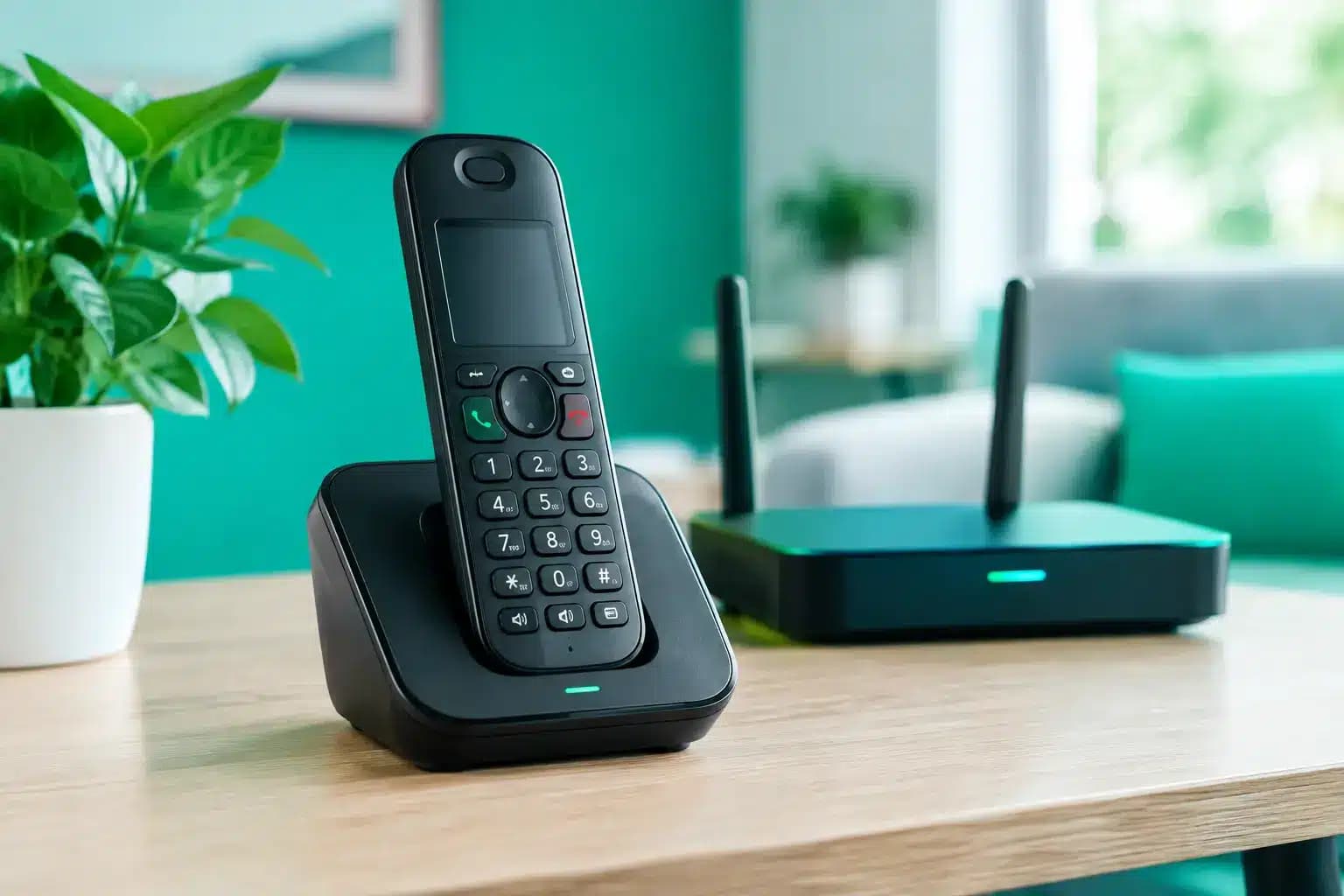
An adapter is often called an ATA – analogue telephone adapter. It gives a conventional corded or cordless phone a new digital route to the outside world. If you already have a decent DECT cordless phone, there is a good chance you can keep using it.
Some providers supply their own handset or a dedicated voice hub. Others allow compatible third-party equipment. Neither approach is automatically better. Provider-supplied kit can be easier to set up and support, while using your own phone may suit a household that wants particular features or handsets in several rooms.
| Setup | How it works | Best for | | — | — | — | | Existing phone with router port | Plug the phone base into the router’s phone socket | A straightforward switch with familiar handsets | | Existing phone with adapter | The adapter connects the phone to your broadband network | Routers without a phone port | | IP phone | The phone connects straight to your router or network | Home offices and users who want business-style features | | App on a mobile | Calls are made and received through an app | Flexibility, though it is not always a full landline replacement |
Your old extension sockets around the house may not work automatically. A digital service usually feeds the phone from the router, not from the legacy master socket. If you want phones in multiple rooms, a cordless DECT system is often the cleanest answer. It avoids paying for rewiring and stops you playing cable archaeologist behind the telly.
Why the UK is moving away from analogue landlines
The UK’s traditional Public Switched Telephone Network, or PSTN, is being switched off as providers move customers to digital services. The old network is ageing, costly to maintain and limited in what it can do. Broadband-based calling is built for the infrastructure homes increasingly use anyway.
This is not just a change for people who make lots of calls. A traditional landline may also support alarm panels, telecare devices, payment terminals, lift lines and door-entry systems. These need checking because an old device that relies on an analogue signal may require an upgrade or a compatible replacement.
For a typical household, digital home phone service can bring clearer call quality, easier number management and useful extras such as voicemail, call blocking, caller display and the ability to divert calls. Availability and included features vary, so check the plan rather than assuming every provider bundles the same bits.
Will call quality be any good?
Usually, yes. A well-configured digital home phone can sound every bit as clear as a traditional line, often clearer. Voice calls do not require much bandwidth, so even a modest broadband connection can handle them comfortably.
The bigger factor is connection stability. If your broadband is dropping out, your digital phone may be affected too. Busy households should also consider how their network handles video calls, gaming downloads, 4K streaming and work traffic at the same time. Full fibre has plenty of headroom for voice calls, but a poor Wi-Fi setup or an overloaded router can still cause trouble inside the home.
If call quality matters for work, use a wired connection for an IP phone where possible. A good router can prioritise voice traffic too, which helps keep conversations clear when somebody starts a giant game download halfway through a call. Timing is everything, apparently.
What happens in a power cut?
This is the trade-off you should understand before moving to digital phone service. A traditional copper landline could often keep working during a power cut because it received power from the telephone exchange. Digital home phones generally need your router, any adapter and your handset base to have electricity.
If the mains power goes off, the phone may stop working. Cordless handsets also need their base station powered up, so they are not much help in a blackout.
There are sensible ways to prepare. Keep a charged mobile phone available, particularly if someone in the home relies on a phone for medical or care reasons. Some providers can discuss resilience options, such as battery backup equipment or a suitable mobile solution, for customers with specific needs. The right option depends on the service and the household, so raise it before installation rather than after the lights go out.
A battery backup is not magic. Its run time depends on the equipment connected and the condition of the battery, and the wider broadband network must still be operating. Treat it as a safety net, not a reason to ignore your mobile.
Can you call 999 from a digital home phone?
Yes, digital home phone services can call 999, but the power-cut point still applies. If your router and phone equipment have no power, you may be unable to place that call from the home phone.
Your provider should hold the installation address associated with your service so emergency services can identify where the call is coming from. Keep that address accurate, especially if you move. And if your household includes anyone who cannot reliably use a mobile, make emergency calling part of the decision, not an afterthought.
Digital home phone versus a mobile-only home
Many people now ask whether they need a home phone at all. It depends on how your household communicates. A mobile-only setup is simple and suits plenty of people, especially renters and lighter callers. But a home phone can still be useful for a shared household number, better indoor calling with a fixed handset, long calls, older relatives and separating personal mobile use from home contact details.
For home workers, a digital phone can also offer a more professional setup without installing an old-fashioned line. Features such as voicemail, call forwarding and a separate number can make work boundaries slightly less chaotic. Slightly. Nobody can fix the group chat.
Before you switch, check these four things
First, confirm whether you want to keep your existing number and ask how the transfer will be handled. Second, check which phones and adapters are included, and whether your current handsets will work. Third, identify anything connected to the old line, including alarms, care devices and entry systems. Finally, make a plan for a power cut, particularly where accessibility or health needs are involved.
Digital home phone is not a lesser version of a landline. It is the modern replacement, with a few practical conditions attached. Choose a provider that explains those conditions in plain English, gives you a clear price and answers when you call. A phone service should make life easier, not leave you decoding the small print.